
Audio Engineer & Video Producer
As an audio engineer, Neil holds a Bachelor of Music with Honours in Recording Arts and
Sciences from the Yong Siew Toh Conservatory of Music (YSTCM), National University of Singapore (NUS). Neil was awarded the full Yong Siew Toh Scholarship in 2011 to pursue his degree and continues to work closely with the conservatory in recording concerts, recording and facilitating orientation programmes, creating videos, and with upcoming plans of collaboration with the professors and students.
.png)

INDIAN RHYTHMS MADE ACCESSIBLE
konnakol for the world

Complex rhythms
1
demystified
Clear step-by-step explanations, breaking down seemingly complex mathematical rhythms into simple formulas
2
in english
No confusing musical jargon in non-english languages, allowing you to immediately access the rhythmic concepts
3
for any genre
Indian rhythmic concepts designed to be applied in diverse musical contexts for any instrument or genre
![[2024.09.20] Neil - 2539.jpg](https://static.wixstatic.com/media/4f6a6f_3ac454dae1214880ae2f6ee8c2e50283~mv2.jpg/v1/fill/w_347,h_523,al_c,q_80,usm_0.66_1.00_0.01,enc_avif,quality_auto/%5B2024_09_20%5D%20Neil%20-%202539.jpg)
Your Instructor
Hi, my name is Neil Chan and I'm a fusion artist and ethnomusicologist from Singapore.
I studied South Indian Classical (Carnatic) music and mridangam from my guru Mr V. Raghuraman from South India.
My intention was always to apply the intricate rhythms of Carnatic music to my primary instrument - the guitar, and my guru has been very generous to guide me in this endeavour.
After years of dedicated study and practice in Carnatic music, I have discovered amazing possibilities to apply the concept of konnakol to diverse styles of music and a variety of instruments.
Now, I am eager to share the beautiful but mysterious art of konnakol to musicians all around the world, packaged in an accessible and easy-to-follow online course: Konnakol for the World!
what is konnakol?

Originating from India, konnakol is the art of performing oral percussive syllables to create rhythmic patterns in time.
Just like in any language, syllables (called ‘sols’) can be strung together to create words, sentences, paragraphs, and even long essays.
What is Konnakol for the world?
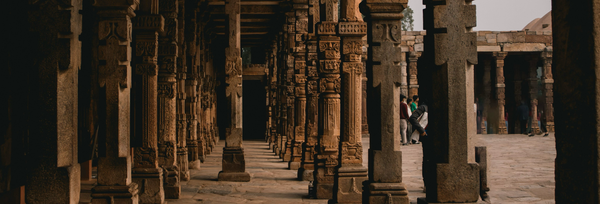
Konnakol for the World is my mission to make the world of Indian rhythms accessible to musicians around the world, regardless of instrument or genre.
Rhythm is a universal and core aspect of music. Not just Indian music, but all music.
Indian musicians have created (over thousands of years) an arguably perfect system of understanding, articulating and performing rhythms to a remarkable level of complexity and dexterity.
I believe that this powerful knowledge can be accessed by all, and I now hope to demystify konnakol for musicians around the world.
APplying konnakol to instruments
Course overview
Here's an brief look at what to expect in the course
Chapter 1: Introduction to Konnakol
Discover Konnakol and how it can transform the way you understand rhythm.
Chapter 2: Basic Vocal Rhythmic Syllables
Learn the essential syllables and start speaking rhythm with your voice.
Chapter 3: Meter and Cyclical Rhythmic Theory
Understand rhythmic cycles and build your skills through progressive exercises.
Chapter 4: Konnakol Groove and Accompaniment
Learn fundamental Konnakol grooves in various speeds.
Chapter 5: Accentuation and Syncopation
Create exciting and unexpected rhythms with accents and syncopation.
Chapter 6: Cadential Progressions
Learn how rhythmic phrases build towards powerful and satisfying endings.
Chapter 7: Mathematical Compositions
Use mathematical patterns to create complex Konnakol compositions.
Chapter 8: Applying Konnakol Across Music Styles
Explore how Konnakol can be applied across diverse music styles.
Special thanks to my guru

With my guru Mr V. Raghuraman in 2016
I am immensely grateful to my guru Mr V. Raghuraman from Alapana Arts Singapore for imparting so much invaluable knowledge of Carnatic music to me.
Thank you for your careful guidance and motivation in developing my musicianship and love for Indian Classical music.
Begin your journey risk-free!
Konnakol for the World is backed with a 14 day money-back guarantee.
I'm confident that you will get so much value in this course that you won't be disappointed, so I'm letting you begin risk-free!
If you are not completely satisfied with the course, I will issue you a full refund upon your request, no questions asked.
frequently asked questions
Do I need to have music experience before starting this course?
Konnakol for the World is designed to help existing musicians develop their sense of rhythm and add a powerful tool to their musical toolkit. To get the most out of this course, you should have some basic experience in music and be able keep a steady beat.
At the same time, the course is designed to be accessible to even beginner musicians, so you don't have to be a professional to enrol.
Will this course make me a professional Indian Classical musician?
No, absolutely not. This course is designed to equip you with a powerful skillset (konnakol) to complement your existing music practice. It is intended for you to apply the knowledge of konnakol to develop your sense of rhythm and understand complex compositions with ease.
If your goal is to be a professional Indian Classical musician, you will have to find a dedicated guru to study a specific instrument intensely.
Do I need to play an instrument to follow the course?
Konnakol is the art of vocalising rhythms with the mouth, and all course content is taught using just the voice and hand claps. Hence, you do not need to play an instrument to follow the course.
However, it is recommended for you to be able to play an instrument to apply the knowledge gained to your own musical practice. The final chapter includes examples of how konnakol can be transferred onto various instruments.
Do I need to learn complex musical terms in a new language?
No, I have done all that for you and translated everything to easily understandable English terms. At times I will mention the original music term for certain concepts, and explain how it can be defined in English. This way, you can immediately access the powerful tool of konnakol in your own music practice.
However, this also means that you will not understand the culture of Indian Classical music in great depth. If you are interested to delve deeper into Indian Classical music in itself, I recommend finding a dedicated guru in your area.
Why are some of your konnakol syllables different from what I've heard elsewhere?
There are many schools within this musical tradition, hence you may find different syllables and approaches used by various practitioners. What I am presenting is what I have learnt and know works for the purpose of this course.
How long do I have access to the course?
On enrolment to Konnakol for the World, you get lifetime access to all course materials. You can then work through the course at the pace that works best for you at the comfort of your own home.
Note: 'Lifetime access' stands for as long as the course page is running. In the unlikely event that I decide to shut down the course (which I have no plans to), I will give at least a 30 days heads up.